If you've looked into air conditioning for your home and been put off by the idea of a large box fixed to your outside wall, you're not alone. The outdoor condenser unit that comes with a traditional split system is one of the biggest barriers for UK homeowners - particularly those in flats, conservation areas, or listed buildings.
The good news: there's a type of air conditioning that works with no outdoor unit whatsoever. It's called a monobloc, and it's the entire focus of what we do at The Air Shop.
How does air conditioning without an outdoor unit work?
In a traditional split system, the outdoor unit contains the compressor - the component that does the work of removing heat from your room and expelling it outside. This is why split systems need an outdoor unit: the compressor has to be connected to the outside world to reject heat.
A monobloc unit works differently. The entire system - compressor, heat exchangers, fan - is contained in one indoor unit. Heat is removed from your room and expelled outside through a duct: a flexible or semi-rigid hose that passes through two small holes in your external wall, typically 120 – 150mm in diameter.
The duct carries warm air from the unit's heat exchanger and exhausts it through a small grille on your external wall - like a tumble dryer vent, but more controlled. That's the only external element: a small grille, flush with your outside wall.
No outdoor condenser. No external fan unit. No brackets on your wall. Just a small circular grille you'd walk past without noticing.

Who is this type of AC designed for?
Monobloc units are the solution for anyone who cannot or does not want to fit a traditional split system. In practice, that covers a surprisingly large proportion of UK homeowners.
Flat and apartment owners and renters This is the most common situation where monobloc AC is the only practical option. Split system outdoor units require fixing to an external wall - which in a block of flats is typically a shared structure. Your lease almost certainly restricts external alterations, and your management company will very likely refuse permission to fix a condenser to the building's facade.

A monobloc unit solves this completely. There's nothing on the external wall except a small flush grille through the wall - comparable to a ventilation grille. Many leaseholders find this doesn't require management company consent at all, or is straightforwardly approved as a minor internal alteration.
Listed buildings and conservation areas Planning restrictions in conservation areas and on listed buildings almost always prevent the installation of outdoor condenser units on visible elevations. The impact on the character and appearance of the building is the primary concern.
A monobloc unit - with no outdoor unit, no brackets, and a small flush external grille - presents an entirely different picture. Many owners of listed properties and conservation area homes install monobloc units without issue. Always confirm with your local planning authority or listed building officer for your specific situation, but the absence of any substantial external alteration means the conversation is usually very different.
Rented properties If you rent your home, making permanent structural alterations is typically not permitted without landlord consent. A split system installation - with its external unit, brackets, and refrigerant pipework - is a substantial alteration that most landlords would need to approve, and many would decline.
A monobloc installation is more easily framed as minor works. The duct holes through the wall can be filled and made good when you move out, leaving no lasting trace. Many tenants find their landlord agrees - especially as it adds value and comfort to the property.
Anyone who wants to avoid engineer costs Even if none of the above restrictions apply to you, the practical appeal of not needing a specialist engineer for installation is significant. Monobloc units can be self-installed. Split systems legally require an F-gas certified engineer for the refrigerant connection stage, adding £500–£1,500 to your total cost.
What are the limitations - and the honest answers
We said at the outset we'd be honest. Here's where monobloc units are not the perfect solution.
They're slightly less energy efficient than split systems Because the compressor is indoors and the heat rejection duct is doing slightly less efficient work than a dedicated outdoor condenser, monobloc units use approximately 10–20% more electricity for the same cooling output compared to a quality split system. For occasional summer use, this difference is minimal. For units running many hours daily throughout the year, it's worth factoring in.
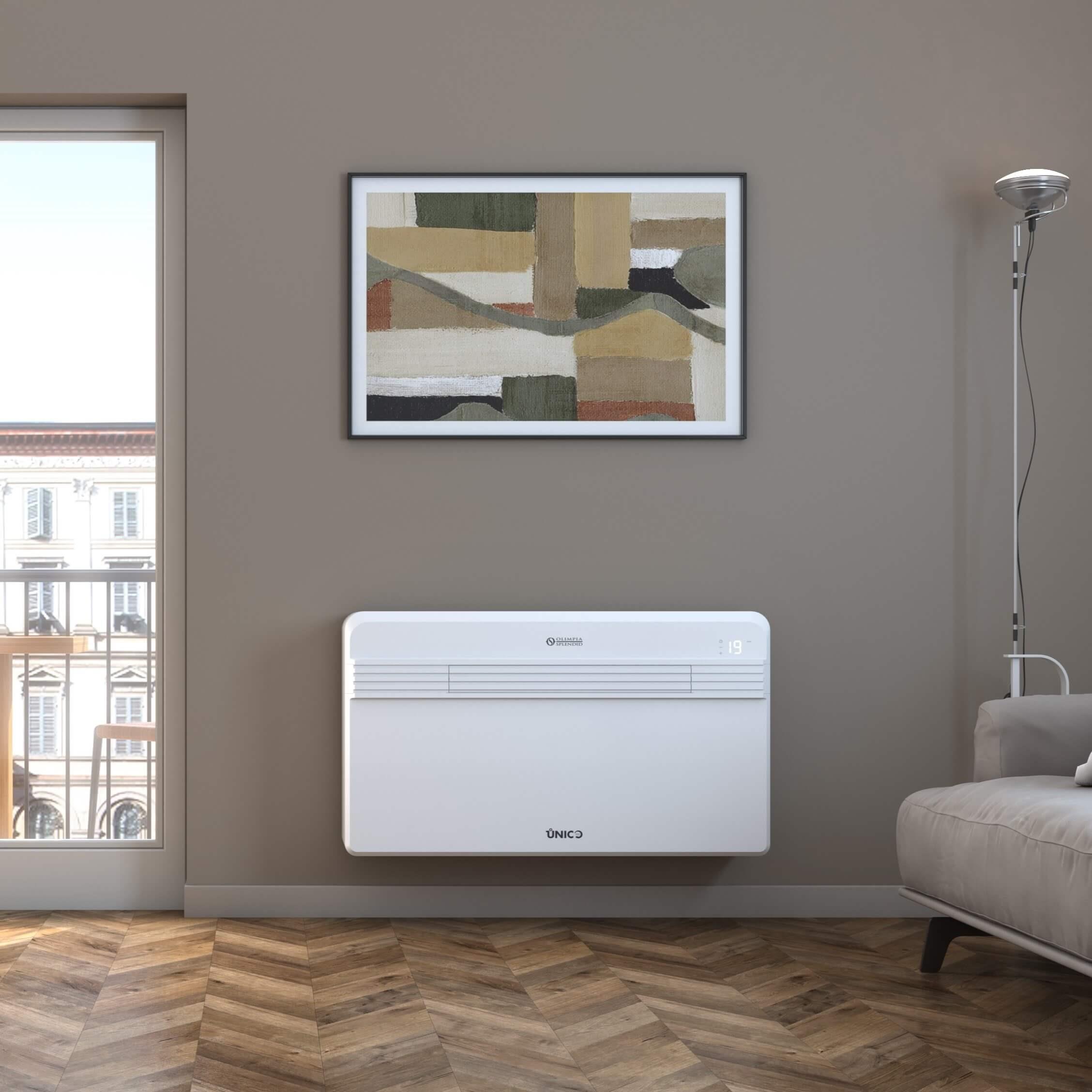
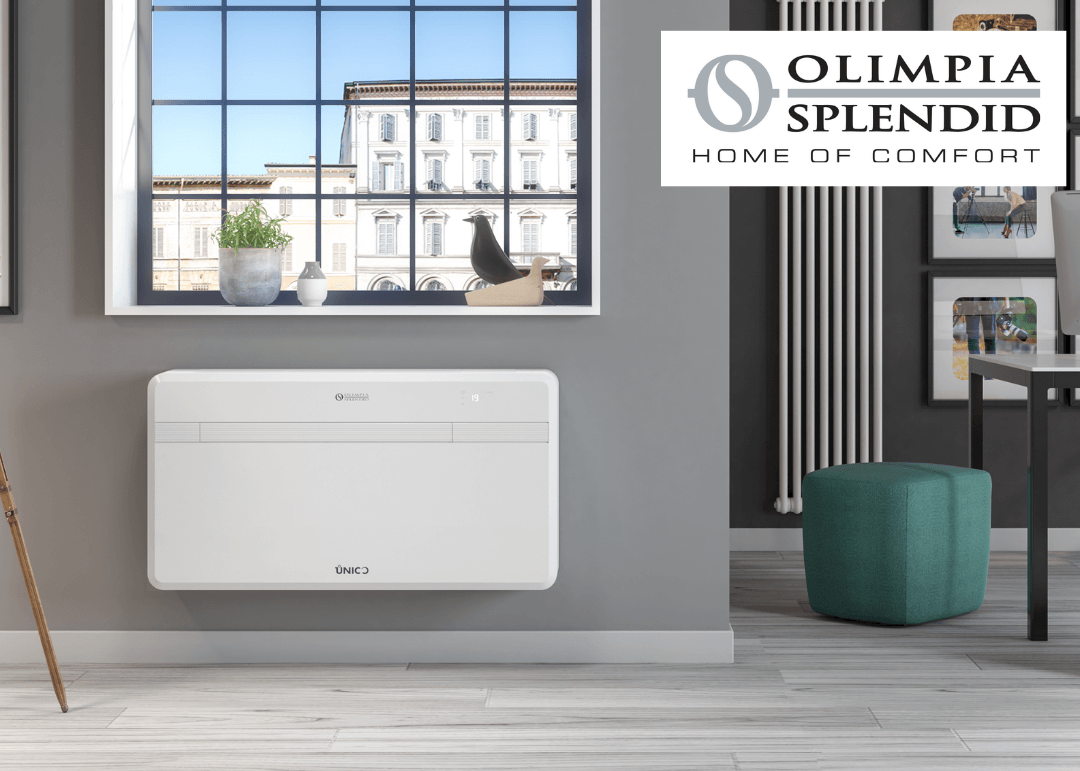
They're larger indoors Because everything is in one indoor unit, monobloc units are bigger inside the room than the slim wall panel of a split system. Modern monobloc units have improved significantly in design terms, but they're still a larger presence indoors than a split system's elegant wall panel.
They're slightly noisier indoors The compressor is inside the room rather than outside. Quality modern units are impressively quiet (from 26 dB(A) in sleep mode), but the best split systems are marginally quieter indoors. For most rooms and most users this makes no practical difference, but it's honest to say it.
They duct through the wall - so you need an external wall This is the one hard requirement. Your room must have an external wall to duct through. If your room is interior - surrounded on all sides by other rooms or internal spaces - a monobloc unit isn't suitable. In practice, most rooms in UK homes have at least one external wall.
What does the installation actually look like from outside?
This is what most people want to know before committing - particularly those in flats or period properties.
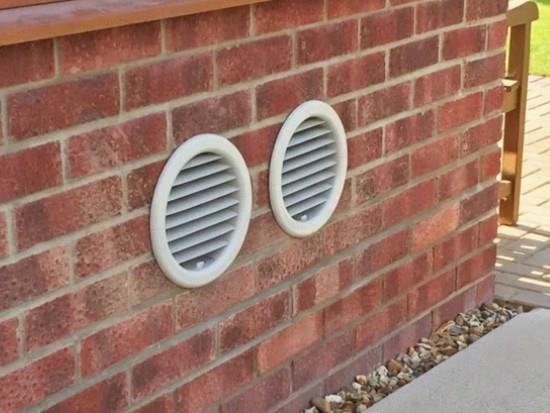
From outside, the only visible element is a small circular grille, typically 120 –150mm in diameter, set flush with your external wall. It's similar in size and appearance to an extractor fan grille or boiler flue terminal. It sits flush with the wall surface and protrudes very slightly if at all.
There are no pipes visible on the outside of the building. No brackets. No large box. No cables. Just a small, neat grille that most people walk past without registering.
The grille is typically grey or white to match common UK render and masonry finishes. Some manufacturers offer alternative colours. If you're particularly concerned about appearance, the grille can be painted to match your wall colour once the sealant has cured.
Can I install it on any type of external wall?
The vast majority of UK external walls are suitable. Here's a quick guide:
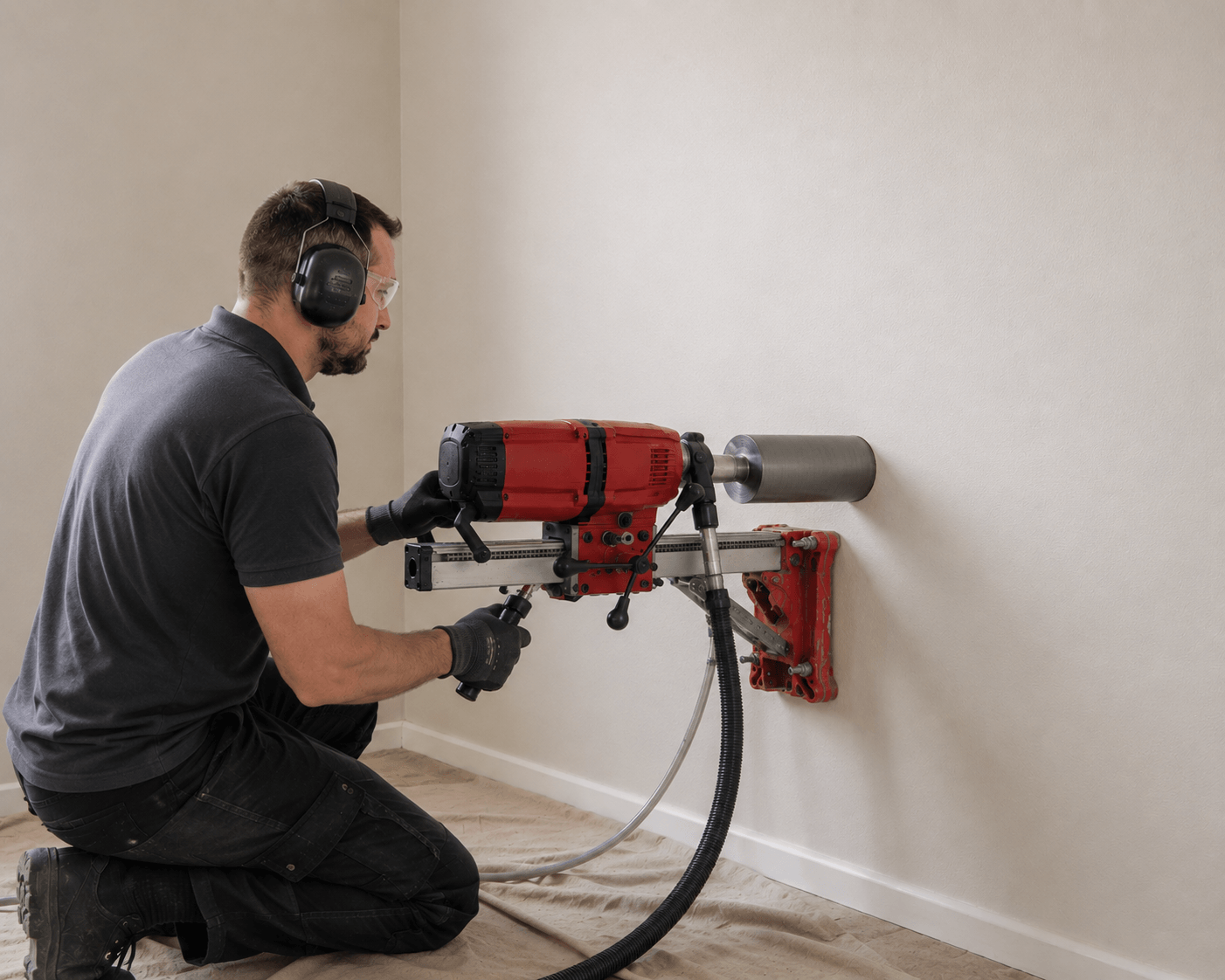
Standard cavity brick or block wall: straightforward. The most common situation and the simplest to drill.
Solid brick wall: straightforward, just requires a longer core drill bit and slightly more time. Common in pre-1930s properties.
Timber frame or SIP panel construction: suitable and common for garden rooms and lodge-style buildings. Take care to identify any structural elements before drilling - check your building's construction drawings if available.
Reinforced concrete: possible but requires specialist drilling equipment. Not common in residential UK buildings.
Stone walls (granite, limestone, sandstone): possible but harder and slower to drill. For very thick stone walls, you'll want to hire a heavy-duty core drill or get a tradesperson to do the drilling specifically.
Glazed conservatory walls: you don't drill through the glazing. The duct goes through the lower brickwork or blockwork base of the conservatory - the solid section below the glazing.
What about the wall sleeve - does it affect insulation?
A correctly installed wall sleeve with an insulated insert and properly fitted external grille has minimal impact on your wall's thermal performance. The sleeve should be sealed on both the internal and external faces, and the grille closes when the unit isn't running to prevent draughts.
An improperly sealed sleeve - where external sealant has been skimped or the grille doesn't close - can allow cold draughts in winter. This is why we always emphasise proper sealant application in our installation guide. Done correctly, you won't notice the sleeve in winter.
Is this the right solution for you?
If you've been told you can't have air conditioning - because you're in a flat, a rented property, a listed building, or a conservation area - the answer in most cases is that you can. You just need the right type.
Monobloc units aren't a compromise or a second-best option. For the situations above, they're the specifically correct solution. For many other homeowners, they're simply the smarter choice - quicker to install, cheaper overall, and with no planning concerns.
If you're not sure whether your specific situation works for a monobloc unit, call us before you buy. We'll ask you a few questions about your room, your wall, and your building type, and give you a straight answer. If it won't work for some reason, we'll tell you that too.
Shop monobloc AC units
Installation guide
Contact The Air Shop
 Share
Share
Back to Blog